

Picture this—your friend just locked in a three-bedroom in Austin at a surprisingly low rate, while you’re swimming in loan offers that feel like alphabet soup. With mortgage rates bouncing like a pinball in recent months and headlines warning of tighter approvals, figuring out your next move in the US mortgage market can feel like navigating a maze blindfolded.
Whether you’re buying your first home or refinancing to cut monthly costs, the US mortgage market in 2026 isn’t just a numbers game—it’s about timing, tactics, and asking the right questions at the right time.
For a bigger-picture playbook on budgeting, saving, and investing fundamentals, explore our flagship resource: Personal Finance Guide.
Table of Contents
Navigating the US Mortgage Market in 2026: Why Rates Matter More Than Ever
Mortgage shopping in the US mortgage market feels like entering a maze where each lender is a different path—some lined with competitive rates, others with hidden fees or stricter approval hurdles.
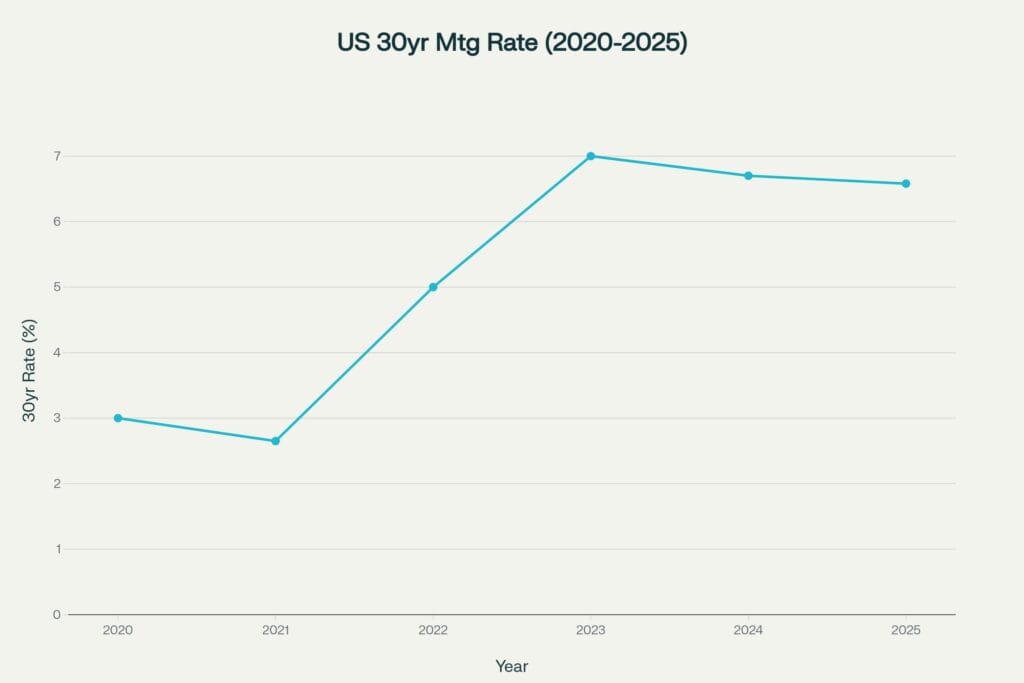
As of writing this article, the average 30-year fixed mortgage rate sits around 6.58%. That’s the lowest since late 2024 but still double the pandemic-era lows near 3%.
Here’s the reality: even small moves matter. On a $400,000 loan, the difference between 6.5% and 7% adds about $130 per month—over $45,000 across 30 years.
Understanding Today’s Mortgage Rate Landscape
What’s Driving Current US Mortgage Rates?
The days of 3% mortgage rates are long gone. In Jan 2026, the average interest rate for a 30-year fixed mortgage sits around 6.58%. Why the climb and relative stability?
- Federal Reserve Policy: After aggressive hikes beginning in 2022, the Fed started easing in 2024, but the US mortgage market continues to move slowly—like a freight train losing momentum.
- Inflation & Economic Data: Lower but persistent inflation keeps lenders cautious.
- Global Factors: Treasury yields remain elevated, influenced by global uncertainty.
How Market Trends Impact Your Monthly Payment
For a median-priced home ($435,300):
- At 6.75% → ~$2,259/month
- At 7.0% → ~$2,320/month
US Mortgage Rate Trends (2020–2025): Average 30-Year Fixed Rate.
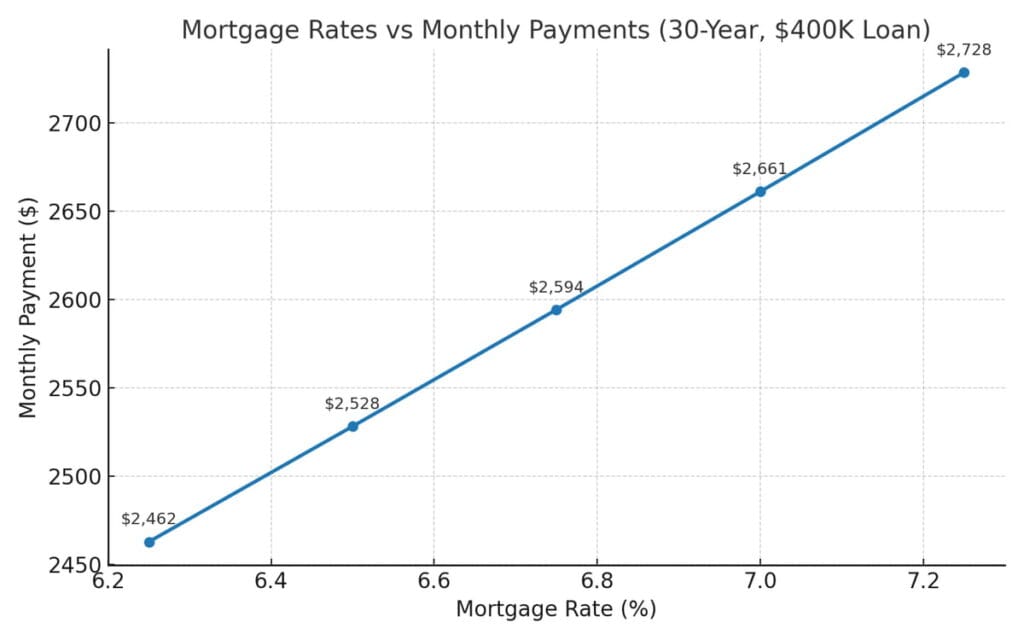
Even a 0.25% change matters in the US mortgage market, affecting long-term affordability.
Mortgage Products Explained: Fixed, Adjustable, and Beyond
Breaking Down the Alphabet Soup
- Fixed-Rate Mortgages (FRMs): Predictable payments over 15–30 years.
- Adjustable-Rate Mortgages (ARMs): Lower initial rates; best if moving soon.
- FHA Loans: Flexible, low down payment (3.5%).
- VA Loans: No down payment for eligible veterans.
- Conventional Loans: Ideal for those with strong credit and 20% down.
Example: A young couple in Ohio might choose FHA, while a veteran in Florida uses VA benefits to avoid a down payment entirely.
Winning at Approval: What Lenders Really Want
Credit Score, Income, and Debt-to-Income Ratio
Think of mortgage approval like entering an underwriter’s courtroom.
Meet Jane—she has a 685 credit score, steady income, and a DTI around 28%. That puts her in a strong position within today’s US mortgage market.
Tips to boost approval odds:
- Clean up small debts.
- Avoid new credit inquiries.
- Save for a larger down payment.
Avoiding Hidden Fees and Red Flags
Always review the Loan Estimate provided under CFPB rules
(learn more: ConsumerFinance.gov).
Pro tip: Credit unions and online lenders often offer lower fees.
Refinancing in a Volatile Rate Environment
Should You Refinance?
Refinancing can reduce payments or shorten your loan term—but timing matters.
Example: Refinancing a $340,000 loan from 7.1% to 6.65% saves over $200/month.
Prudent Timing: Locking in Rates
Rates move quickly. A rate lock (30–60 days) shields you from sudden increases in the US mortgage market.
First-Time Buyer Strategies for 2026
Navigating Down Payments, Grants, and Assistance Programs
The average first-time buyer puts down 9%, not 20%.
Helpful programs include:
- National Homebuyers Fund (up to 5%)
- Bank of America grants (up to $10,000)
- State housing agencies like California’s Dream For All.
Shopping for Lenders
- Big Banks: Reliable but stricter.
- Credit Unions: Personalized and often cheaper.
- Online Lenders: Fast approvals, competitive rates.
Actionable Checklist
- Pull your free credit report (annualcreditreport.com)
- Reduce debt
- Save for down payment + closing
- Compare at least 3 lenders
- Take a HUD-approved homebuyer education course
Summary: Your Mortgage Move, Your Financial Future
The US mortgage market in 2026 demands confidence, strategy, and patience. Whether refinancing or buying your first home, small decisions—rate shopping, education, credit prep—can save you thousands.
Approach the process like a road trip: plan your route, check the weather (Fed signals), and ask questions. Because in the maze of today’s mortgage world, the right strategy doesn’t just get you approved—it gets you home.