

A practical preventive health guide helps you act before problems escalate. Instead of waiting for illness, it focuses on daily habits, early warning signs, and smart choices that quietly protect long‑term well-being. The big idea is simple: consistent, doable steps today can reduce your risk tomorrow—and help you know when to seek care.
Major health organizations, including the CDC and WHO, note that many chronic conditions—heart disease, type 2 diabetes, liver disease, and some cancers—develop silently for years. Prevention isn’t about perfection. It’s about awareness: noticing body changes early, building supportive routines, and understanding when lifestyle changes are enough—and when it’s time to see a professional.
Table of Contents
What Preventive Health Really Means Today
Preventive health is a long-term approach that blends everyday habits, routine checkups, and mindful symptom awareness. Rather than chasing quick fixes, it rewards consistency—sleeping well most nights, managing stress before it becomes chronic, and paying attention to subtle physical changes.
We often think prevention only applies to serious illness. In reality, it starts with common issues like elevated blood pressure, digestive discomfort, fatigue, brain fog, or unexpected weight changes. These may be early signals, not reasons to panic. A practical preventive health guide helps you interpret these signals and respond calmly.
The Hidden Foundation: Sleep and Recovery
Sleep is a powerful driver of cardiovascular, metabolic, and mental health. Poor sleep quality is linked to higher blood pressure, impaired glucose control, reduced immune function, and elevated stress hormones. Over time, chronic sleep loss can quietly magnify risks across multiple body systems.
Treat sleep as a core health behavior: aim for 7–9 hours, consistent bed/wake times, a cool dark room, minimal late-night screens, and caffeine cutoff in the afternoon. The National Institutes of Health highlights sleep as an essential pillar of overall health, with benefits for memory, mood, and metabolic repair.
Think of quality sleep as the quiet cornerstone of a preventive health guide, strengthening heart health, metabolism, immunity, and mental resilience long before problems appear.
Related reading:
Nutrition, Metabolism, and Fasting: Balanced Over Extreme
Nutrition is central to prevention, but extremes create burnout. What works long-term is a balanced plate: lean proteins, colorful vegetables, fiber-rich carbs, and healthy fats. Keep ultra-processed foods and added sugars in check. Hydrate throughout the day, and include protein at breakfast to reduce cravings later.
Intermittent fasting can help some people improve insulin sensitivity and manage cravings, but it’s not ideal for everyone. Those who are pregnant, underweight, have a history of disordered eating, take certain medications, or have complex health conditions should consult a clinician first. The key is flexibility. A preventive health guide encourages informed experimentation—not one-size-fits-all rules.
Related reading:
- Balanced Nutrition for Everyday Health: Simple Rules That Actually Work
- Intermittent Fasting Pros and Cons: Real Benefits, Real Risks, Real Talk
- Intermittent Fasting Plan: A Practical, Science-Backed 7-Day Guide
Stress, Mental Load, and Early Body Signals
Chronic stress is a quiet amplifier of health risk. Elevated cortisol can worsen blood pressure, sleep, digestion, blood sugar, and mood. It often shows up in the body before we label it as stress.
Common early signals include persistent fatigue, tension headaches, neck/shoulder tightness, irritability, trouble falling asleep, or waking at 3 a.m. with a racing mind. You don’t need to eliminate stress; you need a strategy to discharge it daily—through breathwork, strength or mobility work, light cardio, journaling, or time in nature.
A thoughtful preventive health guide treats early stress signals as valuable feedback—helping you release mental and physical load before it quietly disrupts sleep, hormones, and long-term health.
Related reading:
Preventive Health Guide: 12 Essential, Proven Habits
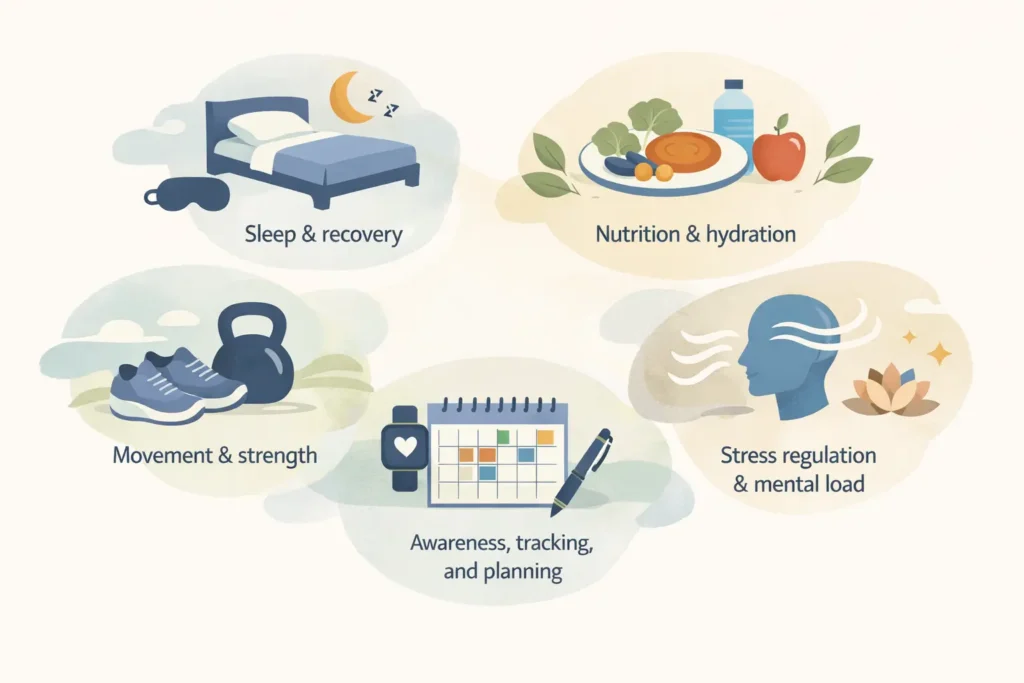
Below are 12 habits I’ve seen repeatedly move the needle. Treat them like dials—turn a few up at a time and give them two to four weeks before judging results.
1) Protect Your First Hour : Start with water, sunlight (or a bright light box in winter), movement, and a protein-forward breakfast. This supports circadian rhythm, energy, and appetite regulation.
2) Walk After Meals : A 10–15 minute walk after eating helps regulate post-meal blood sugar, supports digestion, and steadies energy. It’s tiny but powerful.
3) Two Strength Sessions Weekly : Short, consistent resistance training preserves muscle, supports bone health, and improves insulin sensitivity. Even 2×20 minutes can be transformative.
4) Set a Caffeine Curfew : Stop caffeine 8–10 hours before bed to protect sleep architecture. Better sleep improves blood pressure, mood, and appetite control.
5) Fiber at Every Meal : Aim for 25–35 grams daily from vegetables, fruit, legumes, and whole grains. Fiber supports gut health, cholesterol control, and satiety.
6) Prioritize Protein : Most adults do better at 1.2–1.6 g/kg/day from foods like eggs, fish, poultry, tofu, Greek yogurt, lentils, and tempeh.
7) Micro-Recovery Moments : Insert three 3‑minute breaks: deep breathing, stretching, or stepping outside. These reset stress chemistry.
8) Consistent Sleep/Wake Window : Protect a 60–90 minute window for bedtime and wake-time—even on weekends. Consistency is a sleep superpower.
9) Track One Biomarker : Choose something meaningful—resting heart rate, blood pressure, post-meal glucose (under clinician guidance), or sleep duration. Simple tracking boosts awareness without obsession.
10) Your “Emergency Calm” Plan : Write a short list for tough days: a 10‑minute walk, a grounding breath sequence, text a friend, make a simple protein-and-fiber meal, go to bed 30 minutes early.
11) Weekend Alcohol Audit : If you drink, keep it moderate and alcohol-free on most weeknights. Alcohol disrupts sleep, raises blood pressure, and hinders recovery.
12) A 15-Minute Sunday Reset : Plan three dinners, block workouts on your calendar, and wash/prep produce. Small systems eliminate decision fatigue.
Recognizing Early Warning Signs (Without Panic)
Serious conditions rarely start with dramatic symptoms. They begin as a feeling that something is “off.” Use this quick reference to guide next steps—never to self-diagnose.
- Cardiometabolic clues: New shortness of breath with light activity, chest pressure or tightness, leg swelling, new dizziness, frequent urination, unusual thirst, slow-healing cuts, or morning headaches.
- Mental health shifts: Persistent low mood, loss of interest, social withdrawal, sleep disruption, intrusive or racing thoughts, sudden changes in behavior.
- Digestive/liver flags: Right-upper abdominal discomfort, dark urine, pale stools, persistent bloating, unexplained nausea, or yellowing of skin/eyes (urgent evaluation needed).
- Skin changes: A spot that bleeds, crusts, or changes shape, color, or borders; a wound that doesn’t heal.
If a symptom is new, unusual for you, severe, or progressively worsening, get medical care. The goal of a preventive health guide is calm action—not alarm.
Related reading:
- Early Signs of Schizophrenia: 7 Clear Symptoms You Must Recognize
- Hepatitis C Early Symptoms: The First Warning Sign You Shouldn’t Ignore
- Early Signs of Squamous Cell Carcinoma: 9 Serious Warning Clues
Common Conditions, Gentle Relief
Minor issues still deserve attention. Two examples I see often:
- Digestive discomfort: Start with a food/symptom log, slow down at meals, increase fiber gradually, drink enough water, and add a short post‑meal walk. If pain, bleeding, or persistent changes occur, see a professional.
- Hemorrhoids: Warm sitz baths, increased fiber and fluids, stool-softening strategies, non-straining toilet posture, and short-term topical relief can help. Persistent pain or bleeding warrants evaluation.
Related reading:
Preventive Checkups: What to Test and When
Lifestyle is your daily defense, but checkups are your safety net. Screenings can catch changes early and guide next steps. The U.S. Preventive Services Task Force (USPSTF) and similar bodies publish evidence-based recommendations USPSTF.
Below is a general, educational overview. Your clinician will tailor tests based on age, sex, family history, medications, and personal risk.
| Category | Typical Timing | Purpose |
|---|---|---|
| Blood Pressure | Every visit or at least annually | Detect hypertension |
| Lipids (Cholesterol) | Every 4–6 years; more often with risk | Assess heart risk |
| Diabetes (A1C/Glucose) | Every 3 years; sooner with risk | Detect prediabetes/diabetes |
| Cervical Cancer (Pap/HPV) | Every 3–5 years (per age & method) | Early detection |
| Breast Cancer (Mammogram) | Starting in 40s–50s, per guideline | Early detection |
| Colorectal Cancer | Begin around 45; interval varies | Early detection |
| Vaccinations | Per CDC schedule | Prevent infection |
Related reading:
When Lifestyle Changes Aren’t Enough
Self-care is powerful, but it isn’t a substitute for diagnosis or treatment. Seek medical care if you notice:
- Worsening, persistent, or unexplained symptoms
- Chest pain or pressure, difficulty breathing, severe headache
- Sudden weakness, slurred speech, facial droop (call emergency services)
- Significant unintentional weight loss, ongoing bleeding, or jaundice
A trustworthy preventive health guide always respects medical partnership—using habits to reduce risk while collaborating with clinicians to investigate symptoms and personalize care.
A Simple Weekly Framework You Can Actually Keep
Think in terms of anchors rather than perfection. Here’s a realistic template to adapt.
- Mornings: Water + light + movement + protein (15–30 g). No doomscrolling before breakfast.
- Workdays: Two short strength sessions (20–30 min), two brisk walks, one mobility or yoga session.
- Evenings: A 10‑minute “shutdown ritual” to transition from work. Light dinner, screens off 60 minutes before bed.
- Weekends: Prep three dinners, wash/prep produce, schedule one longer activity (hike, swim, group class).
- Daily sanity: Three 3‑minute micro-recovery breaks. A short gratitude or “done list” at night.
This routine reduces decision fatigue and makes prevention automatic.
Real-World Snapshots (What Progress Looks Like)
- Blood pressure nudge: A reader who walked 12–15 minutes after lunch and dinner, added two 25‑minute strength sessions, and cut caffeine after 2 p.m. saw a 6–8 mmHg reduction in systolic blood pressure over six weeks—without drastic dieting. The American Heart Association notes even modest reductions meaningfully reduce risk.
- Sleep rescue: A client with 2 a.m. wake-ups added a consistent wind-down, lowered bedroom temperature, used a sunrise alarm, and delayed caffeine to mid-morning. Within two weeks, their sleep efficiency improved and daytime brain fog eased.
- Digestive relief: Another reader slowed meal pace, added 8–10 grams of fiber at lunch (beans, veg, whole grains), and walked after dinner. Bloating decreased within a week; energy stabilized over a month.
These are not overnight miracles. They’re steady, repeatable wins—the heart of any preventive health guide.
Early Signs You Shouldn’t Ignore
Use this short list to prompt timely care.
- Heart and vessels: Chest pressure, pain radiating to arm/jaw, sudden shortness of breath, new leg swelling, fainting, or severe dizziness. Call emergency services for acute symptoms.
- Metabolic: Increased thirst, frequent urination, blurry vision, unusual fatigue after meals, or dark velvety patches on skin (acanthosis). Talk with your clinician about checking A1C/glucose.
- Liver: Yellowing of skin/eyes, dark urine, pale stools, easy bruising, or right upper abdominal pain—seek urgent evaluation.
- Mental health: Persistent sadness, anhedonia, significant anxiety, thoughts of self-harm, or drastic shifts in sleep/appetite. Early care is effective care.
- Cancer clues: A mole that changes, a lump that’s new or growing, rectal bleeding, unexplained postmenopausal bleeding, or a cough that won’t resolve—schedule an appointment.
WHO notes that early detection and rapid access to treatment significantly improve outcomes across many conditions (WHO: https://www.who.int/health-topics/noncommunicable-diseases).
Frequently Asked Questions
Do I need to track everything?
No. Track one meaningful metric (e.g., blood pressure or sleep hours). Awareness—not obsession—drives better choices.
Is intermittent fasting required?
Not at all. Some thrive on it; others don’t. A flexible, balanced approach to meals often works just as well. Personalize with your clinician.
What if I can’t exercise much?
Start tiny: two 10‑minute walks on weekdays and a few bodyweight movements (squats, push-ups against a counter, step-ups). Consistency beats intensity.
How fast should I expect results?
Sleep and energy can improve within days. Blood pressure, glucose, and body composition usually shift meaningfully in 4–12 weeks with consistent effort.
Quick Start: 10-Day Preventive Reset
- Days 1–3: Morning light, water, 10-minute walk after your biggest meal
- Days 4–6: Add one 20-minute strength session; cut caffeine after 2 p.m.
- Days 7–8: Eat 25–30 g protein at breakfast; add leafy greens to lunch
- Days 9–10: Create a 20-minute wind-down; screens off 60 minutes before bed
Repeat and refine. A preventive health guide works when it’s simple enough to sustain.
Your Next Best Step
- Choose two habits above and practice them for 14 days.
- Book any overdue screening or checkup.
- Create your “emergency calm” plan on a sticky note.
Final Word
Preventive health is a partnership between you and your clinicians. Habits reduce risk; screenings catch changes early; professional care solves problems that self-care can’t. Keep it simple, consistent, and compassionate. Small actions, repeated, become powerful protection.
This preventive health guide is for educational purposes only and is not a substitute for personalized medical advice.