Personal finance guide thinking isn’t about gaming the system or chasing hacks. It’s about simple, steady moves that build stability over time. This personal finance guide brings all the pieces together—budgeting, savings, credit, debt, banking, insurance, housing, taxes, retirement, and the economy—so your everyday choices feel clear and connected.
If you’ve ever felt like you’re doing “okay” but still stressed, you’re not alone. Most people don’t struggle because of lack of effort—it’s because money decisions get scattered. This guide reconnects the dots so you can move forward with calm, confident steps.
Table of Contents
Personal Finance Guide: What This Covers (and How to Use It)
This personal finance guide is your central reference for practical choices you make every week. Use it to:
- Build a realistic budget that flexes with your life
- Create an emergency fund that turns crises into inconveniences
- Improve your credit score (and lower your costs)
- Pay off debt without wrecking your cash flow
- Choose better bank accounts and apps
- Protect what you’re building with smart insurance
- Navigate mortgage decisions and housing trade-offs
- Plan taxes before April appears
- Start retirement investing without fear or complexity
- Understand inflation and interest rates—without the jargon
You’ll also find links to in-depth TrendPulse explainers for deeper dives, plus outside resources from credible institutions like the CFPB, FDIC, IRS, Freddie Mac, the Federal Reserve, and the BLS.
Why Money Feels Hard (and Why It Doesn’t Have to Be)
Money can feel overwhelming when each part lives in its own silo: budgets over here, credit somewhere else, taxes once a year, and insurance off in the distance. But these pieces affect one another every day. A high-interest card balance (credit) can squeeze your budget. A weak emergency fund can push you into debt. A poorly chosen bank account creates friction and fees.
When you connect the pieces, your decisions start to align. That’s when progress feels steady—not dramatic, just reliable.
A quick example: Maya earns $62,000 and was constantly anxious about bills. She didn’t change jobs or win a windfall. She simply set up a living, flexible budget, moved her savings to a high-yield account, scheduled minimum autopay on every card, and focused on one debt at a time. Six months later, she had $2,500 in savings, a 35-point credit score bump, and $3,100 less in balances. Small, boring moves worked.
Create Clarity With a Realistic Budget
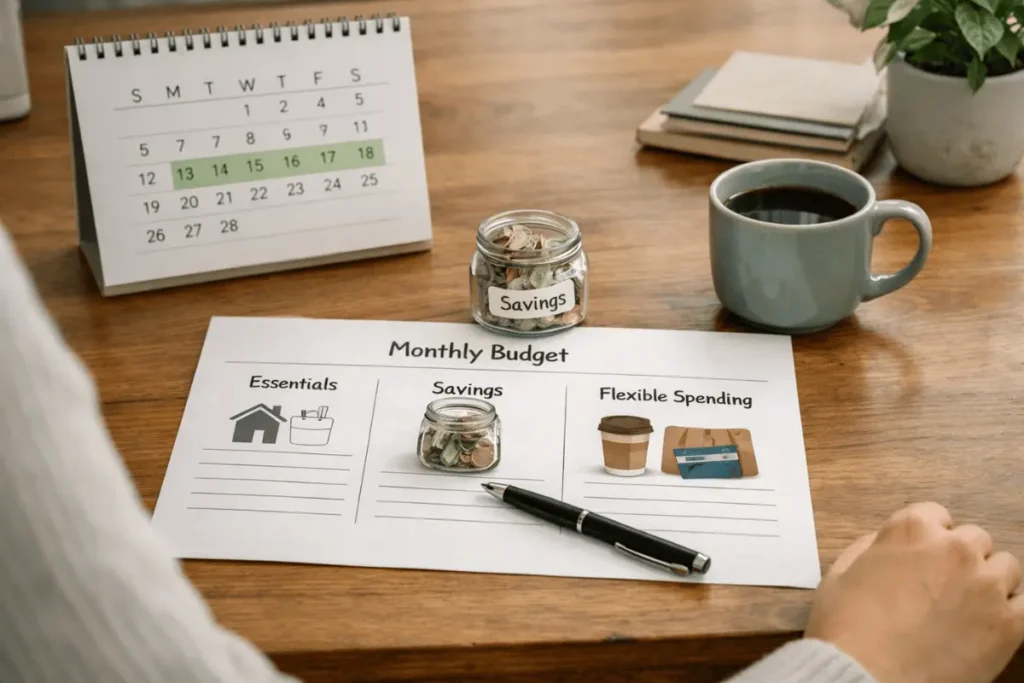
A budget isn’t punishment—it’s a map of reality. Most people fail with budgets because they expect perfection, forget irregular expenses, and assume motivation will solve everything. Instead, focus on awareness and automation.
This personal finance guide frames budgeting as a clarity tool—helping you see where money actually goes so you can automate smarter decisions.
Here’s a practical approach:
1) Track one full month of spending with your bank feed (no judgment).
2) Group by category: Housing, Utilities, Groceries, Transportation, Insurance, Debt, Savings, Lifestyle.
3) Add irregulars: car registration, holiday travel, annual subscriptions—turn these into monthly “sinking funds.”
4) Pay yourself first: schedule savings for payday, not month-end.
5) Keep it flexible: aim for a sustainable 80–90% plan, not a perfect 100%.
Explore a sustainable framework here: How to Build a Simple Monthly Budget That Actually Works
Tip: If you want a simple starting template, try the 60/30/10 model (Needs/Wants/Saving & Debt) and adjust over three months until it fits your real life.
Sinking Funds: Name Irregular Costs Before They Surprise You
Irregular bills aren’t rare—they’re predictable. Turn them into small, monthly “sinking funds” so they never blow up your month.
| Category | Annual Cost | Monthly Set-Aside | Notes |
|---|---|---|---|
| Car Maintenance | $900 | $75 | Oil, tires, brakes |
| Holidays & Gifts | $600 | $50 | Birthdays + holidays |
| Annual Subscriptions | $240 | $20 | Music, cloud, apps |
| Travel | $1,200 | $100 | One trip a year |
Emergency Funds: Turn Crises Into Inconveniences
Emergencies will happen. Without a cushion, even modest surprises push you into high-interest debt. Your emergency fund is a shock absorber—it buys time and options.
How much? A common target is 3–6 months of essential expenses. If you’re a single-income household or in a variable-income job, lean toward 6 months. If you’re just getting started, aim for your first $1,000 as a quick win, then scale up.
Where to keep it: A separate, FDIC-insured high-yield savings account—easy to access but not so easy you’ll spend it.
When to use it: Job loss, medical bills, urgent car/home repairs, emergency travel. Not for routine bills, vacations, or takeout.
Detailed guidance here: How Much Emergency Fund You Need (and Where to Keep It)
Credit Scores: The Silent Gatekeeper
Your credit score affects mortgage rates, car insurance premiums, rental approvals, and deposits for utilities. It’s not about income—it’s about behavior and consistency. This personal finance guide shows how small, repeatable credit behaviors quietly influence long-term borrowing costs.
The FICO score generally weighs five areas:
- Payment history (~35%)
- Amounts owed/credit utilization (~30%)
- Length of credit history (~15%)
- New credit (~10%)
- Credit mix (~10%)
Simple improvements:
- Autopay at least the minimum on every account (avoid late payments)
- Keep utilization under 30%—under 10% is even better
- Ask for a credit limit increase (if you won’t spend more)
- Space out new accounts
- Check your reports for errors and dispute inaccuracies
Deep dive on credit mechanics and improvements: How to Improve Your Credit Score: A Practical Guide to Faster Gains
Understand FICO scoring: https://www.myfico.com/credit-education/whats-in-your-credit-score
Debt Management: Escape the Minimum-Payment Trap
Debt gets dangerous when it quietly controls your cash flow. High-interest balances limit your options and raise your stress—yet paying off debt without a plan can backfire if it empties your savings and pushes you back onto cards.
Two popular payoff methods:
| Method | Order | Best For | Pros |
|---|---|---|---|
| Avalanche | Highest APR first | Mathematically lowest cost | Saves most interest |
| Snowball | Smallest balance first | Motivation and momentum | Quick psychological wins |
Pro tips:
- Keep minimum autopay on all accounts to protect your credit.
- Pick one method and stick to it for 90 days—then reassess.
- Consider 0% balance transfer offers only if you can pay off during the promo window and won’t add new debt.
- If considering consolidation, compare total cost, fees, and payoff timelines—don’t just chase a lower monthly payment.
A realistic, step-by-step framework: Smart Debt Management: Pay Off Debt Without Wrecking Your Budget
Banking Basics: Choose the Right Home for Your Money
Good accounts make good habits easier. Poor accounts drain you with fees and friction.
Look for:
- Fee-free checking with strong ATM access
- A separate high-yield savings account
- Fast transfers between checking and savings
- Useful alerts: low-balance, large transactions, bill due dates
- Clear overdraft policies
Separate your money by purpose: one checking account for bills, a second for everyday spending, and a separate high-yield savings for emergency/sinking funds. Splitting your direct deposit on payday is simple and powerful.
More on choosing and combining accounts: How to Choose a Bank Account: A Practical Guide to Checking, Savings, and Online Options
Use Technology Wisely: Apps That Actually Help
Personal finance apps should reduce friction—not add noise. The right tool depends on your style:
- You love structure: YNAB (You Need A Budget) or Tiller (spreadsheets)
- You prefer automation and insights: Monarch Money or Rocket Money
- You want bank-level overviews: Many banks now provide built-in spend tracking and category tools
Choose one primary system and stick with it. Too many dashboards cause decision fatigue. A balanced review of popular apps:
Top 10 Best Personal Finance Apps for Americans (Reviews & Comparison)
Protect Your Progress: Insurance Is Financial Defense
Insurance doesn’t prevent bad things—it prevents financial collapse when bad things happen. Focus on coverage, not just premiums. This personal finance guide treats insurance as financial protection for your future—not a product to shop purely on price.
- Health insurance: Understand HMO vs. PPO vs. HDHP. If you choose an HDHP, consider an HSA for triple tax advantages (pre-tax in, tax-free growth, tax-free qualified withdrawals). Learn more at HealthCare.gov: https://www.healthcare.gov
- Auto: Liability limits matter; add comprehensive/collision if your car’s value justifies it.
- Homeowners/Renters: Protects your stuff and personal liability.
- Life: If someone relies on your income, consider term life (often 10–15x annual income).
- Disability: Often overlooked; protects your paycheck if you can’t work.
Deep insurance guide: Insurance Coverage Guide for the US: Choose Health, Auto, Life & Home Wisely
Housing Decisions: Mortgages, Rates, and Timing
Housing is often your biggest financial commitment. Small changes in rates or terms can cost—or save—tens of thousands over time.
Key concepts:
- Preapproval: Shows sellers you’re serious and sets a realistic price range.
- DTI (Debt-to-Income): Most lenders want <43%; lower is stronger.
- PMI: If you put <20% down on conventional loans, you may pay private mortgage insurance.
- Loan types: Conventional, FHA, VA, USDA—each with unique rules.
- Points: You can “buy down” your rate—compare breakeven math before paying.
Practical U.S. mortgage market guide: US Mortgage Market : 7 Smart Ways to Get the Best Rates, Refinance, and Buy Your First Home
Taxes: Plan Before April
Taxes shouldn’t be a once-a-year scramble. A little planning can reduce surprises and keep more cash in your pocket legally.
Smart moves:
- Adjust withholding with the IRS Tax Withholding Estimator
- Maximize employer match in your 401(k)
- Use HSAs/FSAs if available
- Time charitable giving or deductions (“bunching”)
- Track basis and costs on investments
- Keep receipts organized digitally
Midyear is a great moment to get ahead: Midyear Tax Planning: 6 Smart Moves to Maximize Next Year’s Refund
Retirement: Start Simple, Start Now
Retirement planning is less about picking perfect investments and more about consistent contributions and time in the market.
Start with:
- Grab the full employer match—this is an instant, risk-free return
- Consider a target-date index fund for one-stop diversification
- If you don’t have a 401(k), open a Roth or Traditional IRA
- Increase contributions 1% each year (or with every raise)
Beginner-friendly retirement overview: Retirement Planning Basics: Start Early Without the Overwhelm
Understand the Economy Without the Jargon
Inflation, interest rates, and headlines can feel noisy. A few indicators help you stay grounded:
- Inflation (CPI): Impacts grocery prices and purchasing power—track at BLS
- Interest rates: Guide loan costs and savings returns—watch the Fed and mortgage trends
Plain-language explainer: Inflation and Interest Rates: A Practical Guide to Protect Your Money
Practical takeaway: When rates rise, prioritize high-interest debt payoff and take advantage of higher savings yields. When rates fall, revisit refinancing.
Avoid the Most Expensive Mistakes
Common money mistakes are predictable—and avoidable:
- Carrying balances on high-interest credit cards
- Ignoring account and investment fees
- Missing employer matches
- Waiting to save “until things calm down”
- Reacting emotionally to market swings or headlines
A deeper breakdown: Common Personal Finance Mistakes to Avoid (and How to Fix Them Fast)
A Simple 90-Day Action Plan
If this personal finance guide feels like a lot, start small. Here’s a proven three-month plan that builds momentum without burnout.
Month 1: Stabilize & See Clearly
- Track every transaction automatically via your bank or one app
- Build a mini emergency fund: first $500–$1,000
- Set autopay for minimums on every debt
- Pull free credit reports and fix any obvious errors
Month 2: Reduce Friction
- Separate checking (bills vs. everyday spending)
- Open a high-yield savings account (move emergency fund)
- Create sinking funds for predictable “surprises”
- Pick one debt payoff method (Avalanche or Snowball)
Month 3: Build for Tomorrow
- Get your full employer match
- Increase retirement contribution by 1–2%
- Review insurance coverages and deductible trade-offs
- If home buying is on your horizon, check DTI and credit—and get prequalified to understand your range
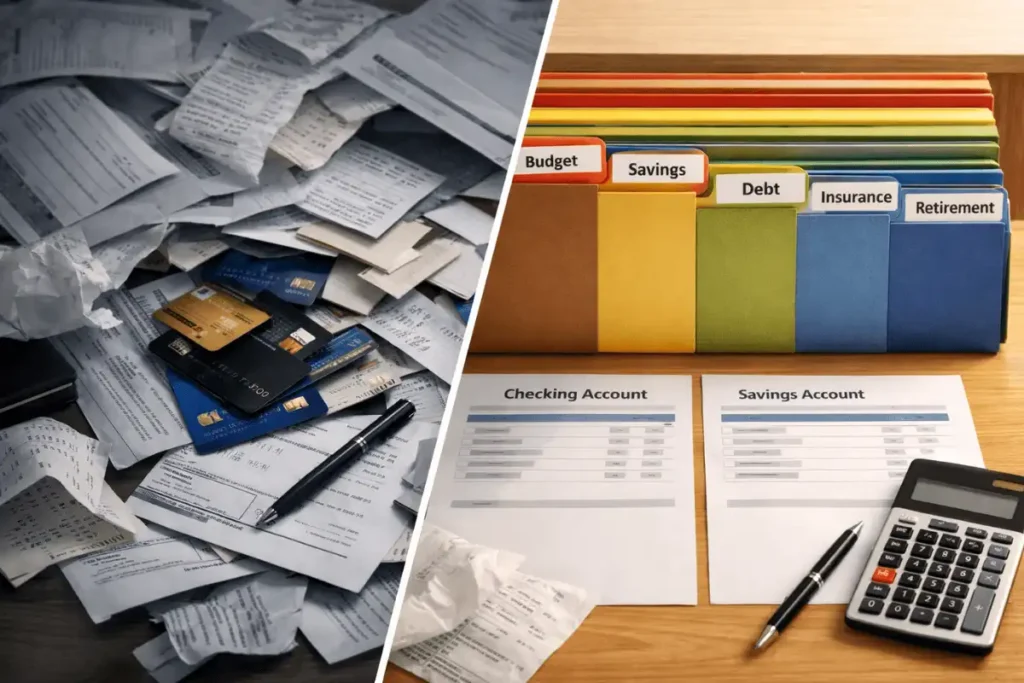
Quick-Access Checklist: Documents and Accounts to Organize
Gathering the right documents once makes everything easier later.
| Item | Where | Why It Matters |
|---|---|---|
| Pay stubs & W-2/1099 | Secure cloud folder | Budgeting, taxes, loan applications |
| Insurance policies | Secure cloud + agent contact | Coverage details & renewals |
| Account statements | Bank portals + downloads | Tracking & dispute support |
| Credit reports | AnnualCreditReport.com | Error fixes & loan prep |
| Estate basics | Will, beneficiaries | Protects your family & wishes |
Real-World Nuance: Balancing Math and Motivation
The “best” system is the one you’ll use. If you’re a spreadsheet person, go deep. If you prefer automation and quick wins, keep it simple. Pick the smallest change that makes the biggest difference—often that’s autopay, separating accounts by purpose, or naming your sinking funds.
Also: perfection isn’t required. You’ll have off months. What matters is the habit of adjusting, not abandoning the plan. Think in seasons, not days.
Final Thoughts: Stability Is Built, Not Discovered
Good money management isn’t about winning—it’s about resilience. When your budget, emergency savings, credit habits, insurance choices, and long-term investing pull in the same direction, options open up. Options are freedom.
Revisit this personal finance guide whenever life shifts—new job, new city, new goals. The foundation remains steady: clear thinking, responsible choices, and confidence built through understanding.
For deeper dives on any section above, explore the linked resources and keep building your momentum—quietly, steadily, and with purpose.