
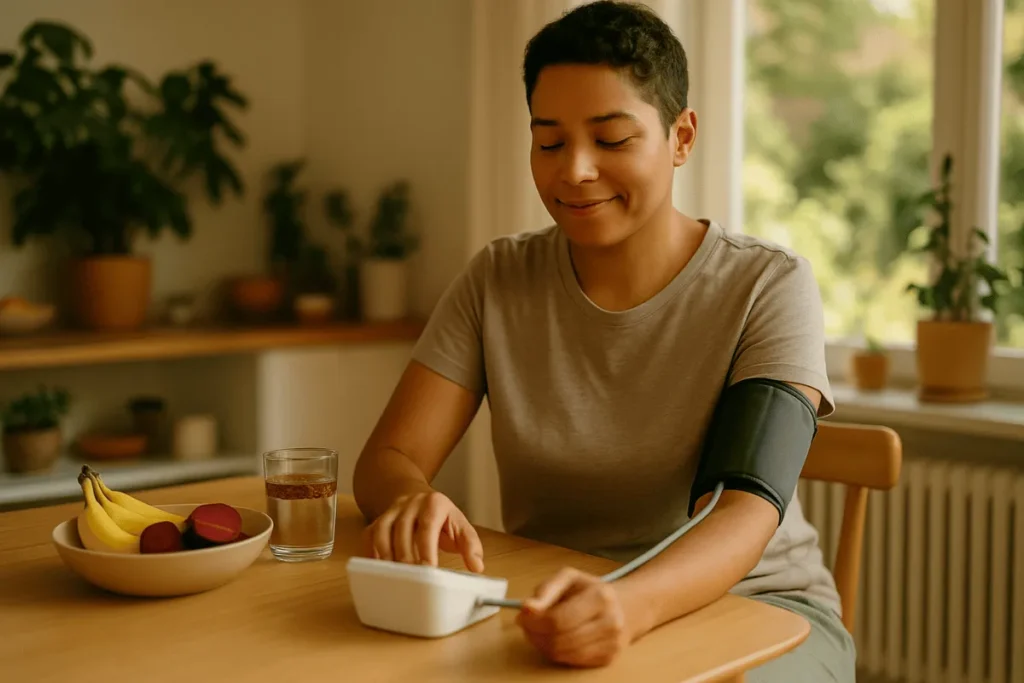
A month ago, a clinic monitor flashed 145/95 at me. Stage 2 hypertension. I felt fine, but the numbers said otherwise. I wasn’t ready to go straight to medication if I had safe lifestyle options. So I committed to a realistic experiment: for 30 days, I would lower blood pressure naturally with small, doable habits I could keep.
What follows is exactly what I did, what changed, and how you can adapt it. No crash diets. No two-hour workouts. Just consistent steps that stack up.
We explore this topic as part of our Complete Guide to Preventive Health, a central resource on habits and early warning signs.
Table of Contents
How to Lower Blood Pressure Naturally: My 30-Day Plan
Here’s the big picture of what I changed:
- Cut hidden sodium while keeping real flavor
- Moved more without “working out”
- Practiced five minutes of calming breathwork daily
- Built meals around plants that support heart health
- Tracked blood pressure at home using good technique
By the end, my numbers dropped to 126/82. More important, I felt calmer, slept better, and had a plan I could actually live with.
Note: This is my experience, not medical advice. If your blood pressure is high, talk with your clinician about the right plan for you. The American Heart Association (AHA) classifies 140/90 and above as hypertension; 145/95 lands in Stage 2. If you’re in that range, please consult a professional first.
Week 1: Cut Hidden Salt, Keep Flavor
Sodium was my sneak attacker. I didn’t think I ate “salty,” but labels told a different story. Canned soups, jarred sauces, pickles, papads, and even “healthy” snacks were loaded. I aimed for under 2,300 mg sodium per day (and as close to 1,500 mg as I could) as recommended by the AHA.
What worked:
- Swap processed snacks for roasted nuts, fruit, and yogurt
- Replace jarred sauces with garlic–lemon–pepper, yogurt–mint, or tomato–basil blends
- Choose low-sodium versions of broth, beans, and condiments
- Rinse canned beans and veggies to remove extra sodium
- Season with smoked paprika, cumin, turmeric, citrus zest, chilies, and fresh herbs
Fast flavor idea: Toss steamed veggies with olive oil, lemon zest, crushed garlic, and a pinch of toasted sesame seeds. The first few days felt bland, but by Day 4 my taste buds woke up; veggies tasted surprisingly sweet, my fingers weren’t puffy, and my rings slipped on easily.
Week 2: Move More—Without the Gym
I’m not a gym person. Instead of forcing intense workouts, I focused on moving more in simple ways. The goal: be consistent so my heart gets steady benefits.
What I did:
- 10–15 minute walk after breakfast (helps blunt post-meal blood pressure spikes)
- Evening stroll with a friend—movement plus mood boost
- Set a 50-minute timer while working; stand, stretch, or do 20 bodyweight squats
- Took calls while walking and parked farther away
Results: better sleep, fewer energy crashes, less stress-snacking. The CDC recommends at least 150 minutes of moderate activity per week; I built toward that with bite-size walks. If you’re starting from zero, two or three 10-minute walks a day can still lower blood pressure naturally and feel surprisingly doable.
Week 3: Breathe Your Way to Calm
Stress isn’t just “in your head”—it’s a physical driver of blood pressure. I committed to five minutes of slow, deliberate breathing each morning. The routine:
- Inhale through the nose for 4 seconds
- Hold for 4 seconds
- Exhale through the mouth for 4 seconds
- Hold for 4 seconds (box breathing)
Five minutes, eyes closed. That’s it. My resting heart rate eased, traffic irritated me less, and I stopped snapping at small things. Slow, paced breathing has been shown to reduce systolic pressure acutely in some people; many clinicians recommend it as a safe, supportive habit.
If 4-4-4-4 feels awkward, try 4-6 (inhale 4, exhale 6). Exhale slightly longer than inhale; it cues your nervous system to relax. This tiny practice helped me lower blood pressure naturally more than I expected.
Week 4: Plant Power, Without Going Extreme
I didn’t overhaul my diet. I added more plants known to support healthy blood pressure—especially potassium-rich foods that balance sodium.
- Potassium all-stars: bananas, sweet potatoes, spinach, tomatoes, avocados, lentils
- Nitrate-rich beets: I roasted beetroot or added it to smoothies (dietary nitrates support nitric oxide, which relaxes blood vessels)
- Flaxseed: 1–2 tablespoons in smoothies or oatmeal for plant omega-3s and fiber
- Beans and greens: inexpensive, filling, and naturally low in sodium
Caution: If you have kidney disease or take certain medications, ask your clinician before increasing potassium. For most healthy adults, potassium-rich foods are a powerful dietary ally.
I also kept an eye on:
- Alcohol: limited to 0–1 drink most days
- Caffeine: no coffee within six hours of bedtime and none 30 minutes before measuring BP
- Hydration: a full glass of water with each meal
How I Measured at Home (So the Numbers Were Trustworthy)
Good technique matters. I used a validated home monitor, measured at the same time each day, and followed standard steps.
- Sit for 5 minutes, back supported, feet flat, legs uncrossed
- Cuff at heart level on bare arm; correct cuff size
- No exercise, caffeine, or nicotine 30 minutes prior
- Two readings, one minute apart; record the average
The CDC’s guide on home monitoring is clear and helpful. Tracking correctly showed me which habits actually helped me lower blood pressure naturally.
30-Day Plan at a Glance
| Week | Main Focus | Daily Target | Food Anchor | Notes |
|---|---|---|---|---|
| 1 | Hidden Sodium | < 2,300 mg (aim 1,500 mg) | Low-sodium swaps, herbs, citrus | Read labels; rinse canned foods |
| 2 | Gentle Movement | 2–3 x 10–15 min walks | Hydrate; light post-meal walk | Stand, stretch every hour |
| 3 | Breathwork | 5 minutes daily | Morning routine | 4-4-4-4 or 4-6 pacing |
| 4 | Plant Power | Plants at every meal | Beets, greens, flax, beans | Watch alcohol/caffeine |
Real-Life Tips That Made This Easy
- Flavor first: buy one new spice weekly; zest citrus over veggies
- Make it visible: pre-wash greens; keep fruit at eye level
- Build automatic movement: after-meal walk is “non-negotiable” but short
- Keep a tiny ritual: five-minute breathing pairs well with coffee or tea
- Batch-cook once: roast a tray of veggies and a pot of lentils for easy meals
These small choices let me lower blood pressure naturally without feeling deprived.
My 30-Day Results (And What I’ll Keep Doing)
Final reading: 126/82. More energy, less afternoon slump, and steadier moods. I’m keeping the sodium awareness, short walks, five-minute breathing, and plant-forward meals. They’re simple, affordable, and—best of all—sustainable.
If your numbers are creeping up, today can be your Day 1. Pick one habit and start. Even a 10-minute walk, a low-sodium swap, or five minutes of slow breathing can help you lower blood pressure naturally over time.
Quick FAQ
- How fast can you lower blood pressure naturally? Some people notice small changes within days (especially from sodium cuts and slow breathing). Meaningful, lasting changes usually build over weeks.
- Do I need to go vegan? No. You can keep animal proteins—just add more plants and watch sodium.
- Should I buy supplements? I didn’t. Food-first works for most people. If you’re considering supplements, talk with your clinician.
Helpful references:
- American Heart Association: blood pressure basics, sodium, lifestyle (https://www.heart.org/)
- CDC: home monitoring and activity guidance (https://www.cdc.gov/)
- NIH: research summaries on lifestyle and blood pressure (https://www.ncbi.nlm.nih.gov/)
You’ve got this. Start small, stay steady, and let your everyday choices do the heavy lifting.