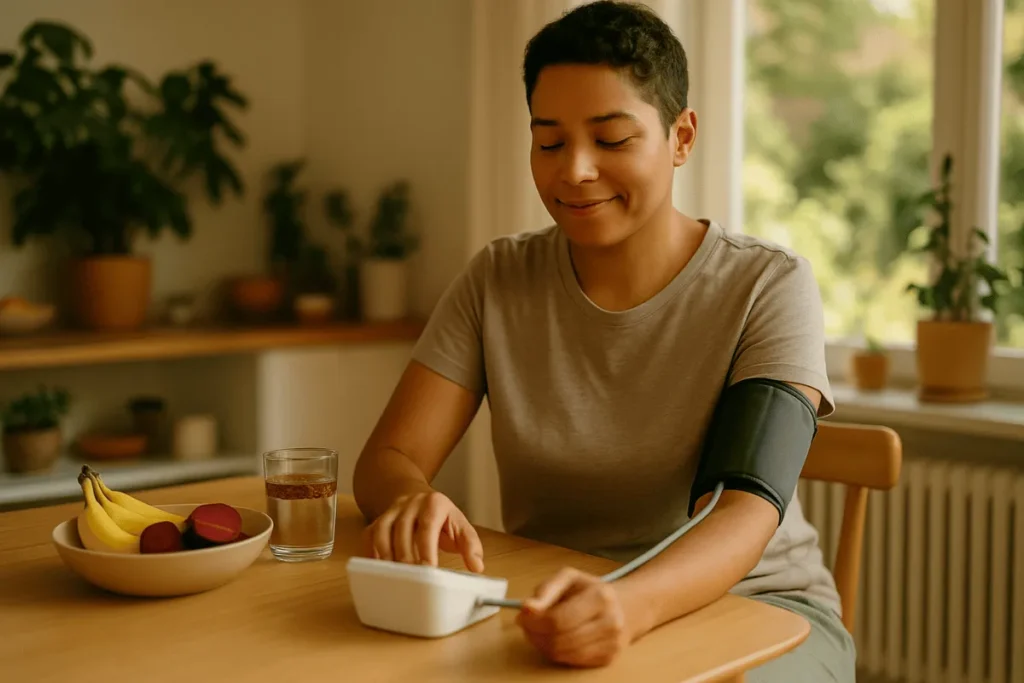

Chronic stress is sneaky. It doesn’t crash through the door like a crisis; it slides into routines, changes your sleep, and hides behind “just being busy.” If you’ve been running on fumes, the early signs of chronic stress show up as small, repeated shifts. This guide helps you spot those early signs of chronic stress, understand what’s happening inside your body, and take practical steps to turn things around.
This article is part of our Complete Guide to Preventive Health, where we cover habits, early signs, and long-term wellness strategies.
Table of Contents
Why chronic stress isn’t just “a bad day”
A rough morning raises your heart rate and sharpens your focus—then your system resets. Chronic stress is different: your stress response (the HPA axis) keeps humming, and your body can’t get back to baseline. Over time, this “always on” state creates allostatic load—wear and tear that affects your heart, gut, immune system, skin, hormones, and brain.
- Acute stress: short-term, often motivating
- Chronic stress: long-term, cumulative, health-depleting
Research from the National Institute of Mental Health shows that ongoing stress affects memory, mood, sleep, and immunity (source: https://www.nimh.nih.gov/health/publications/stress). The American Psychological Association notes that body-wide consequences can appear earlier than many people realize (source: https://www.apa.org/topics/stress/body). Understanding the early signs of chronic stress helps you intervene sooner—and more effectively.
Spot the early signs of chronic stress
Chronic stress rarely arrives with a single dramatic symptom. It’s a pattern—a cluster of small shifts that add up. Notice any of these for a few weeks? Consider that your body is asking for a reset.
1) Your sleep shifts (and not in a good way)
- You fall asleep only to wake at 2–4 a.m., mind racing.
- You jolt awake before your alarm and feel unrefreshed.
- You need weekend “catch-up” sleep to survive the week.
Why it happens: Elevated evening cortisol and adrenaline disrupt your natural sleep-wake cycle.
Try this first: Anchor a consistent wake-up time and dim screens 60 minutes before bed. If you wake in the night, skip doom-scrolling; try slow breathing or a short body scan.
2) Your gut starts talking
- You swing between constipation and loose stools.
- You feel bloated after meals you used to tolerate.
- Your appetite is either missing or relentless.
Why it happens: Stress alters gut motility, increases intestinal permeability, and shifts the microbiome (overview: https://www.ncbi.nlm.nih.gov/pmc/articles/PMC6469451/).
Try this first: Eat at regular times, add a daily fiber source (like oats or beans), and sip water through the day. Keep caffeine earlier and lighter.
3) Tension shows up in your head, jaw, and neck
- You get more headaches or migraines.
- Your jaw aches in the morning (night clenching is common).
- Your neck and shoulders feel like concrete by afternoon.
Personal note: During a product launch years back, I woke with jaw pain for weeks before realizing I was grinding my teeth. A bite guard plus a five-minute evening stretch routine helped within days.
4) Your heart lets you know
- Your resting heart rate creeps up.
- You feel harmless but unnerving palpitations.
- Your blood pressure edges higher at checkups.
Why it matters: Chronic stress is linked to elevated cardiovascular risk (overview: https://www.heart.org/en/healthy-living/healthy-lifestyle/stress-management/stress-and-heart-health).
Try this first: Track your resting heart rate for a week. Add two daily micro-breaks to downshift (see techniques below).
5) You catch more colds (or they linger)
- You get sick more often or take longer to recover.
- Skin infections, mouth ulcers, or cold sores pop up.
Why it happens: Stress hormones suppress certain immune functions. Over time, your defenses dull.
6) Your mood and focus change
- You feel more irritable or impatient.
- Brain fog makes simple tasks feel heavy.
- You “doom-think” (catastrophize) when small issues pop up.
Why it happens: Prolonged stress reshapes attention and memory. You’re not weak; your brain is adapting to a high-alert setting.
7) Hormones speak up
- Menstrual cycles shift (shorter, longer, heavier, or missed).
- PMS/PMDD symptoms intensify.
- Libido drops.
Why it happens: Stress can disrupt estrogen, progesterone, and testosterone signaling, temporarily changing cycles and desire.
8) Your skin sends signals
- Acne or eczema flares after stressful weeks.
- Skin feels drier or more reactive than usual.
Why it happens: Stress can impair the skin barrier and increase inflammation. The American Academy of Dermatology offers practical guidance.
Quick reference: common early signs of chronic stress
| Early Sign | What It Looks Like | Why It Happens | First Step |
|---|---|---|---|
| Sleep disruption | 2–4 a.m. wakeups, unrefreshed mornings | Elevated evening cortisol | Consistent wake time, dim screens in last hour |
| Gut changes | Bloating, irregularity, appetite swings | Motility shifts, microbiome changes | Regular meals, fiber, earlier caffeine |
| Muscle tension | Headaches, jaw clenching, tight neck | Sympathetic overdrive | 5-minute stretch + heat or massage ball |
| Heart signs | Higher RHR, palpitations | Stress hormones raise arousal | Track RHR; add 2 daily downshifts |
| Immune dips | Frequent colds, slow recovery | Immune suppression | Sleep, hydration, gentle activity |
| Skin changes | Breakouts, flares, dryness | Barrier disruption, inflammation | Mild skincare, reduce late-night screens |
Check your stress load in 10 minutes
You don’t need a lab to get a read. Spend 10 minutes with this self-audit:
- Sleep: How many nights in the last week were truly restful?
- Energy: Do you crash most afternoons? Do you need caffeine to function?
- Mood: Are you more irritable than usual? Snapping at small things?
- Body: Headaches, tight shoulders, jaw pain, stomach changes?
- Focus: Are simple tasks taking longer? Do you reread emails?
- Social: Do you withdraw from friends or dread calls/messages?
- Habits: Are alcohol, sugar, or late-night screens creeping up?
Score each 0–3 (0 = fine, 3 = problematic). Totals above 10 suggest your body is asking for a reset. That’s not a verdict—just a nudge to address the early signs of chronic stress before they snowball.
Evidence-backed ways to lower chronic stress (beyond bubble baths)
Your goal isn’t to remove stress; it’s to give your body regular signals of safety so it can return to baseline more easily. These approaches directly counter the early signs of chronic stress.
1) Start with sleep—your biggest lever
- Aim for 7–9 hours nightly (CDC guidance: https://www.cdc.gov/sleep/about_sleep/how_much_sleep.html).
- Keep a consistent wake time, even on weekends.
- Get morning light for 5–10 minutes to anchor your circadian rhythm.
- Dim lights and screens 60 minutes before bed; if you must use devices, enable night mode.
- If your mind races, keep a bedside notecard to “transfer” worries. Write them down; handle them tomorrow.
2) Move your body—any way you can
- 150 minutes/week of moderate activity lowers stress and improves sleep quality (overview: https://www.health.harvard.edu/staying-healthy/exercising-to-relax).
- Short counts: three 10-minute walks beat zero. Try a brisk walk after lunch to curb the afternoon slump.
- On tense days, choose low-to-moderate intensity (walk, cycle, yoga) to avoid overstimulating an already wired system.
3) Use micro-recovery breaks
Think of these as pressure valves sprinkled through your day.
- Physiological sigh: Inhale through the nose, take a second quick sniff in, slow exhale through the mouth. Do 5–10 cycles.
- 4-7-8 breathing: Inhale 4, hold 7, exhale 8. Two minutes.
- Body reset: 60-second shoulder rolls + jaw release + neck stretch.
- Visual reset: Look at a distant point for 30–60 seconds to relax eye muscles and attention.
4) Eat in patterns, not perfection
- Regular meal times calm the nervous system.
- Include protein and fiber at each meal to level energy.
- Front-load caffeine (before noon) and cap total intake to protect sleep.
- Hydrate: even a 1–2% drop in hydration can amplify fatigue and headaches.
5) Close the stress cycle daily
Stress isn’t finished when the stressor ends. Your body needs a “finisher” signal: movement, crying, laughter, deep connection, or creative expression.
Try one daily:
- 20–30 minutes of moderate movement
- A belly laugh (comedy clip, funny friend)
- A 20-second hug with someone you trust
- Singing along to a favorite song in the car
6) Create boundaries that stick
- Timebox tasks: Give email 20 minutes, not “whenever.”
- Protect one meeting-free block daily to do deep work or fully rest.
- Say, “I can do X by Friday, or Y by Wednesday. Which is more important?”
- Turn off non-essential notifications. Silence isn’t selfish; it’s strategic.
7) Build a plan you’ll actually follow
Pick two tiny, non-negotiable habits:
- The anchor: same wake time daily
- The valve: one micro-recovery break before lunch and one before dinner
- The guardrail: no screens in the last 30 minutes of the day
Track for 7 days. Adjust, then add one new habit. Small steps done consistently beat heroic sprints—and prevent the early signs of chronic stress from gaining ground.
When to seek help
Stress is part of life, but some signs deserve professional support:
- Chest pain, fainting, or severe shortness of breath (call emergency services).
- Panic attacks that keep returning.
- Persistent low mood, hopelessness, or thoughts of self-harm.
- Sleep that doesn’t improve with basic changes.
- Significant weight change or missed periods for several months.
- Palpitations paired with dizziness or pain.
If you’re in the U.S. and thinking about self-harm, call or text 988 for the Suicide & Crisis Lifeline (https://988lifeline.org). Your primary care provider can check blood pressure, labs, and refer you to therapy or stress-focused programs. Cognitive behavioral therapy, mindfulness-based stress reduction, and biofeedback have strong evidence for reducing chronic stress symptoms (overview: https://www.nimh.nih.gov/health/topics/psychotherapies).
Bringing it all together
Chronic stress thrives in the gaps—too little sleep, too few breaks, too much noise. The early signs of chronic stress are not failures; they’re feedback. Start with one anchor habit (consistent wake time), one valve (two micro-breaks), and one boundary (screen curfew). Notice how your sleep, gut, tension, skin, and mood shift over two weeks.