Credit scores are a financial gatekeeper: rarely noticed when life is smooth, and suddenly essential when you need a loan, insurance, or a premium rewards card. If you’ve ever wondered how to improve your credit score without guesswork, this guide gives you the playbook—what actually moves your score, what doesn’t, and the exact steps to take for meaningful progress.
If you’re building a broader money plan, you’ll also find this helpful: a comprehensive personal finance guide that connects credit to budgeting, debt payoff, and long-term goals.
Table of Contents
Credit Scores Explained: What They Are and Why They Matter
A credit score is a three‑digit number (typically 300–850) that estimates how likely you are to repay borrowed money. Lenders use it to decide approvals and pricing. Higher scores unlock lower interest rates and better offers; weaker scores can mean higher costs—or denials. If you’re focused on how to improve your credit score, it helps to understand what the number truly represents: risk, not character.
There are multiple scoring models, but the two most common are FICO and VantageScore. Both rely on your credit reports and evaluate similar behaviors (on-time payments, balances relative to limits, length of history, and more). The algorithms differ, but the goal is the same—predict the likelihood of default.
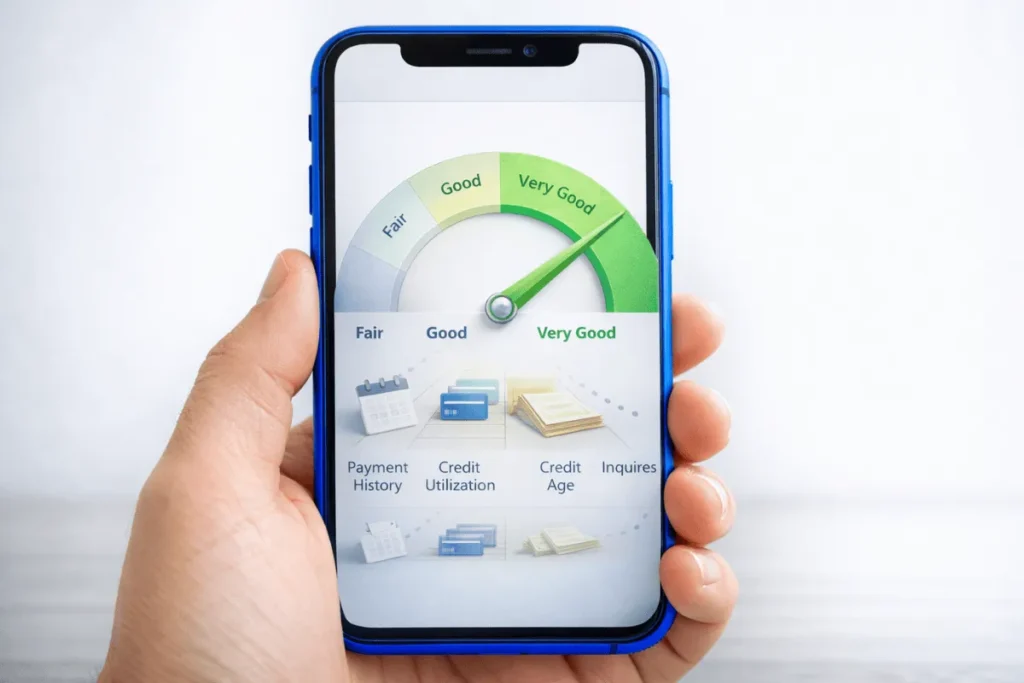
Here’s a quick look at typical score ranges:
| Range | Category | What It Means |
|---|---|---|
| 300–579 | Poor | High risk; limited options and higher rates |
| 580–669 | Fair | Subprime offers; room for faster improvement |
| 670–739 | Good | Competitive approvals; decent rates |
| 740–799 | Very Good | Strong approvals; better-than-average rates |
| 800–850 | Exceptional | Top-tier approvals and best rates |
A quick reality check: your score isn’t a moral judgment—it’s a math model. Change the inputs, and you change the output. That’s the foundation of how to improve your credit score.
What Impacts Your Score (and By How Much)
While models vary, FICO’s categories are a useful guide:
- Payment history (35%): Do you pay on time?
- Amounts owed/credit utilization (30%): What share of your revolving credit is used?
- Length of credit history (15%): How long have accounts been open?
- Credit mix (10%): Do you handle both revolving and installment credit?
- New credit (10%): How recently have you applied for accounts?
Below are practical ways to tackle each factor.
Payment history (35%)
A single 30-day late payment can weigh on your score for months; 60- and 90-day lates hit harder. Collections and charge-offs are heavier still. To prevent damage—and begin how to improve your credit score—make “never late” your default:
- Turn on autopay for at least the minimum for every account.
- Add reminders a few days before due dates.
- If you’re behind, call the lender. Many offer hardship programs or will consider a goodwill adjustment after you’ve caught up.
Real-world tip: If a genuine error led to a one-time late, a short, polite letter explaining the situation can help—especially if you have years of on-time history.
Credit utilization (30%)
Utilization = your total credit card balances divided by your total limits. Lower is better. Under 30% overall is healthy; under 10% is ideal before major applications.
- Make a payment right before the statement closes to reduce the balance reported to bureaus.
- Ask for a limit increase (without increasing spending).
- Spread balances across cards to keep each card under 30%.
Why it matters: This is one of the fastest levers in how to improve your credit score because utilization updates monthly.
Length of history (15%)
Older accounts signal stability. Closing your oldest card can shorten your average age and trim points.
- Keep no-annual-fee cards open, even if used sparingly.
- Use your longest‑tenured card for a small recurring bill and pay it off monthly.
Credit mix (10%)
A blend of revolving (cards) and installment loans (auto, student, mortgage) can help. But never open accounts just for “mix.” Responsible management beats variety.
New credit (10%)
Each hard inquiry may cost a few points temporarily. Multiple new accounts in a short time can appear risky. Rate shopping for a mortgage or auto loan generally counts as a single inquiry if done within a short window.
- Space out applications; be strategic.
- Know soft vs. hard checks: soft pulls (like checking your own score) don’t affect your score. Hard pulls might.
A quick perspective: Moving from a “good” score (e.g., 700) to “very good” (e.g., 760) could mean a lower mortgage rate, which may save thousands over time.
How to Improve Your Credit Score: A Step-by-Step Plan
Improvement is less about hacks and more about repeatable habits. If you’ve asked how to improve your credit score quickly and safely, start here.
Step 1: Get your data—and fix errors
You can access free credit reports from each major bureau. Download them, scan for mistakes, and dispute inaccuracies.
- Get reports: AnnualCreditReport.com
- Dispute errors: CFPB guide to disputes
What to look for: duplicate accounts, incorrect late payments, wrong balances, or accounts you don’t recognize (possible identity theft). If fraud is suspected, file at IdentityTheft.gov and consider a freeze or fraud alert with each bureau.
Step 2: Automate on-time payments
Autopay is your credit score’s best friend. If cash flow is tight, set autopay to the minimum and make extra payments manually. A 6–12 month streak of on-time payments can meaningfully help when you’re focusing on how to improve your credit score.
Step 3: Lower your utilization—fast
- Make an extra payment right before your statement closes.
- Request a credit limit increase (especially after a raise or improved income).
- Consider a 0% intro APR balance transfer to pay down faster—watch transfer fees and promo end dates.
Case in point: I worked with a reader, Ana, who had 46% utilization across three cards. By making mid-cycle payments and requesting limit increases (after a year of perfect history), she dropped to 17% within two months. Her score moved from 668 to 715—without changing her total payoff plan.
Step 4: Keep old accounts open and active (when fee‑free)
Close fee-bearing accounts you don’t need, but preserve no‑annual‑fee cards—especially your oldest. A small recurring charge you pay in full each month keeps them active.
Step 5: Build positive history if you’re new to credit
- Secured credit card: Put down a deposit and treat it like a debit card—always pay in full.
- Credit‑builder loan: A small installment loan held in a savings account you pay monthly.
- Authorized user: Join someone else’s long, on‑time account; ensure it reports and has no late payments.
- Rent/utility reporting: Services that add on‑time rent or utilities to your file can help thin files. Example: Experian Boost. Results vary; read the fine print.
Step 6: Clean up high‑impact negatives
- Late payments: After you catch up and show consistent on‑time history, politely request a goodwill removal for a one‑off late.
- Collections: Many collectors will delete (a “pay for delete”) in exchange for payment—get it in writing.
- Medical debt: Paid medical collections no longer appear on consumer credit reports, and smaller medical debts have been removed under recent changes.
Step 7: Time your moves before big applications
Plan 3–6 months ahead of a mortgage or auto loan:
- Avoid new accounts and hard inquiries.
- Drive utilization below 10%.
- Check all three reports for accuracy and dispute early.
Step 8: Protect your progress
- Set up account alerts for due dates, large transactions, and credit changes.
- Keep an emergency fund to avoid missed payments.
- If you travel, add autopay buffers or bank alerts so a trip doesn’t trigger a late.
Quick Wins vs. Lasting Habits
Below is a simple map to turn “how to improve your credit score” into daily behavior.
| Factor | Target | Quick Win | Lasting Habit |
|---|---|---|---|
| Payment History | 100% on-time | Enable autopay | Bill calendar + 1-week buffer |
| Utilization | < 30% (ideally < 10%) | Mid-cycle payment | Pay in full monthly |
| Length of History | Older average age | Keep no-fee cards open | Use oldest card lightly |
| Credit Mix | Diverse, if natural | — | Add installment only if needed |
| New Credit | Few hard pulls | Rate-shop in a short window | Space applications by months |
How to Check and Monitor Your Credit (Without Hurting It)
- Pull reports: Use AnnualCreditReport In some periods you can pull weekly; otherwise at least annually.
- Track your score: Many banks and cards offer free FICO or VantageScore updates.
- Watch for changes: Set alerts for balance spikes, new accounts, or missed payments.
- Know the difference: Checking your own score is a soft inquiry and won’t affect your credit.
Monitoring isn’t about obsession. It’s about catching errors early and confirming that your “how to improve your credit score” plan is working.
Common Credit Score Myths (And The Truth)
- Myth: Checking my own credit score hurts it.
Truth: It’s a soft pull. You can check as often as you’d like. - Myth: Closing a card will help my score.
Truth: It often hurts by raising utilization and reducing the average age of credit. Consider keeping fee‑free cards open. - Myth: Paying off a collection removes it from my report.
Truth: Not automatically. Ask for “pay for delete” or confirm the collector updates status to paid. Medical debts may be treated differently under recent changes. - Myth: Income directly affects my score.
Truth: Income isn’t part of the scoring model. Your behavior with credit is what counts. - Myth: Carrying a balance improves my score.
Truth: You don’t need to carry a balance. Paying in full avoids interest and supports lower utilization.
A Quick Credit Score Action Plan
- Today: Pull your credit reports and flag errors. Turn on autopay for every account.
- This week: Pay revolving balances down—especially before statement close. Ask for reasonable limit increases.
- This month: Create a simple bill calendar. If new to credit, open a secured card or become an authorized user.
- Next 90 days: Keep utilization under 30% (ideally under 10%), avoid new hard inquiries, and maintain perfect on-time payments.
Small, steady moves compound. If your focus is how to improve your credit score, momentum builds as your on‑time streak grows and utilization drops.
FAQs: Straight Answers to Common Questions
- How long does it take to raise a score significantly?
Many people see movement within 30–60 days after lowering utilization or fixing errors. Larger gains often track a 3–6 month period of on‑time payments. - Will buy now, pay later (BNPL) plans affect my score?
Reporting is evolving and inconsistent. Some providers report activity; others don’t. Late payments can still hurt your finances. - Should I use a debt consolidation loan?
It can help if it lowers interest and you stop using old cards for new debt. Consider total costs and fees before applying. - Is it worth paying for a credit monitoring service?
Free tools from banks and bureaus often suffice. Paid services may add alerts or identity protection features—compare benefits versus cost.
Conclusion: Your Score Is a System—You Can Learn It
Credit scores reward consistency: pay on time, keep balances low, and be thoughtful about new credit. If you stick to the plan—data check, automation, utilization control, and patience—you’ll see results within weeks and meaningful gains in a few months. That’s the reliable path for anyone wondering how to improve your credit score.
Ready to upgrade more than your score? Start with this personal finance guide and connect better credit to your bigger goals. Your next approval—and lower rate—isn’t luck. It’s a system you can master.