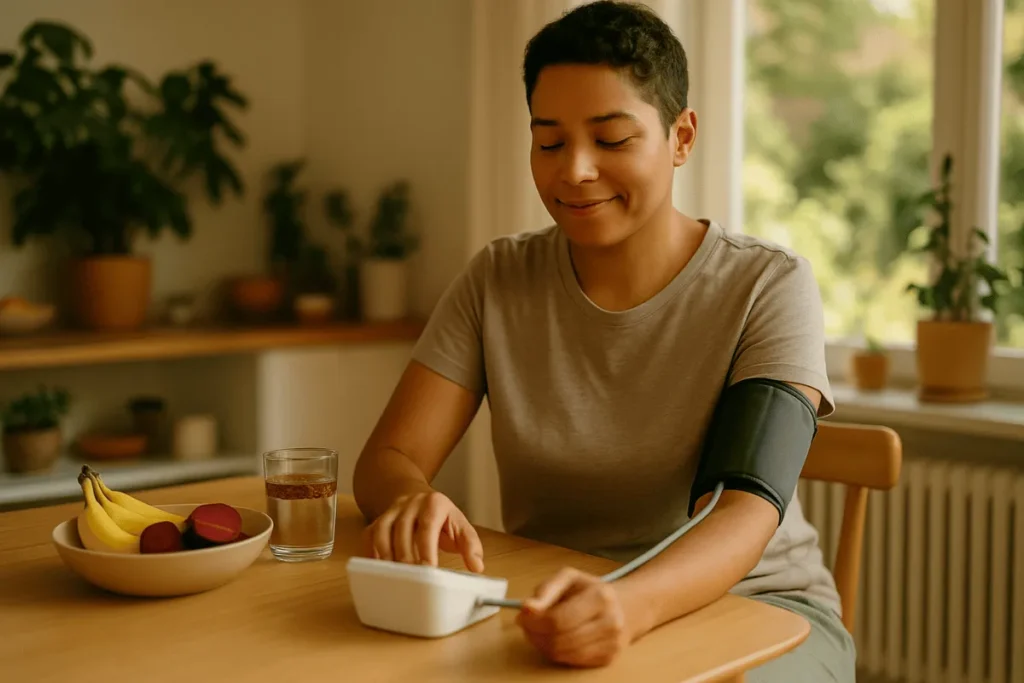

We’ve all been there: you start strong, then 3 PM hits and you’d trade your inbox for a brownie. A realistic intermittent fasting plan should help you win those moments—not white-knuckle through them.
In this practical, science-backed guide, you’ll learn how to choose a fasting window, what truly breaks a fast, simple hunger hacks, and how to keep your social life intact. If you want the deep science first, see my earlier piece: Intermittent Fasting Pros and Cons: Real Benefits, Real Risks, Real Talk.
We explore this topic as part of our Complete Guide to Preventive Health, a central resource on habits and early warning signs.
Note: Intermittent fasting isn’t for everyone. If you’re pregnant or nursing, under 18, have a history of disordered eating, take medications that require food, or manage conditions like diabetes, talk to your clinician before starting.
Table of Contents
How to Pick an Intermittent Fasting Plan (and Actually Stick With It)
Think of fasting like strength training. Go too hard too soon, and motivation tanks. Start with a gentle window, build consistency, and let your body adapt.
Common Fasting Windows
- 14:10 (fast 14 hours, eat 10 hours)
Best for true beginners. It’s a confidence-builder and often reduces mindless late-night snacking. - 16:8 (fast 16 hours, eat 8 hours)
A popular starting point. Small human studies suggest time-restricted eating can support fat loss and insulin sensitivity without draining energy (see Sutton et al., Cell Metabolism, 2018). - 18:6 (fast 18 hours, eat 6 hours)
Works well if you prefer fewer, bigger meals. Some research indicates appetite hormones like ghrelin adapt over time, making longer fasts feel easier. - 20:4 / OMAD (one meal a day)
Best for experienced fasters. It can be effective but increases the risk of overeating or under-recovering from workouts if you’re not careful.
Pro tip: If you currently eat from 7 AM–9 PM, don’t jump straight to 18:6. Shrink your eating window by 30 minutes every day or two until you land on a sustainable intermittent fasting plan.
What Actually Breaks a Fast?
Black coffee? Fine. A creamy latte? Not so much. When in doubt, keep it plain.
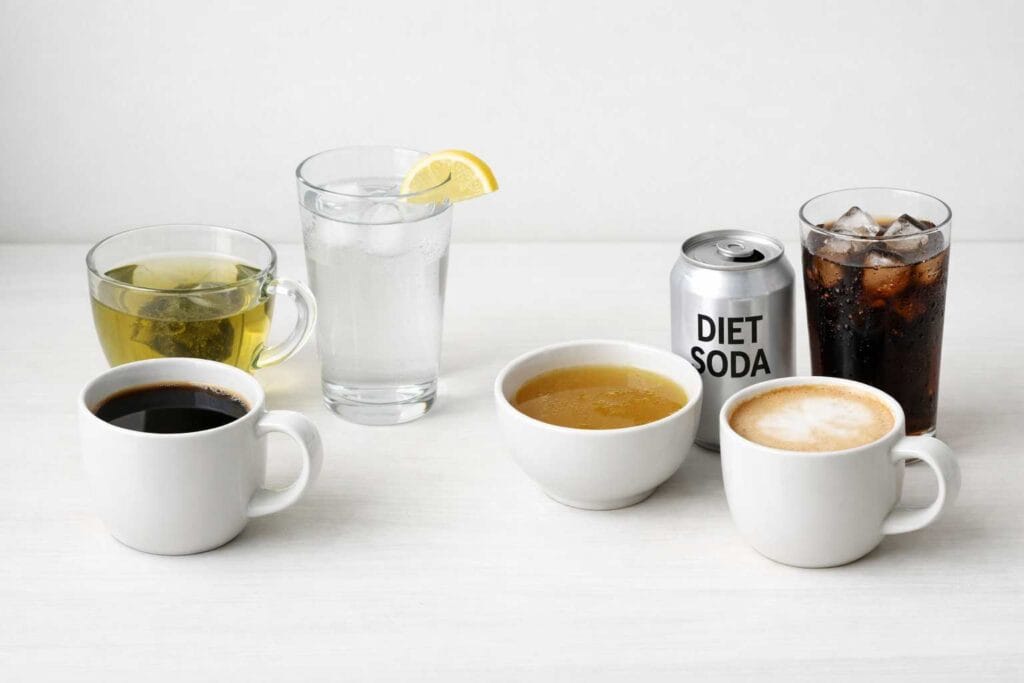
| Item | Breaks Fast? | Notes |
|---|---|---|
| Black Coffee | ✅ Safe | Try cinnamon or a pinch of sea salt for flavor |
| Green/Herbal Tea | ✅ Safe | Unsweetened only |
| Apple Cider Vinegar | ✅ Safe | 1 tsp in water, optional |
| Bone Broth | ⚠️ Depends | Small amounts on light days may be OK; it does contain calories |
| Diet Soda | ❌ Not Safe | Sweeteners can trigger cravings; may affect insulin in some |
| Creamer/Milk | ❌ Not Safe | Even “just a splash” adds calories |
| Lemon in Water | ✅ Safe | A minimal squeeze is fine |
Quick rule: If it tastes sweet or creamy, assume it’s breaking your fast.
What about supplements? Zero-calorie electrolytes are fine. Most multivitamins are okay, but fat-soluble vitamins (A, D, E, K), fish oil, and probiotic capsules may sit better with food. If something makes you nauseous on an empty stomach, take it during your eating window.
Taming Hunger Without Food
Hunger tends to come in short waves. Give it 10–15 minutes and it usually fades.
- Hydrate smarter: During a fast you excrete more sodium. Add a pinch of mineral salt to water and sip throughout the morning. You can also add magnesium (200–300 mg glycinate) and potassium from whole foods during your eating window.
- Use micro-distractions: When a craving hits, walk for five minutes, make tea, or set a 15-minute timer. Most urges pass if you keep your hands busy.
- Mind your coffee: Cap black coffee at 1–2 cups. Too much can spike cortisol, leaving you wired then ravenous later.
- Name it: Ask, “Is this hunger or boredom?” If you’re genuinely hungry, start with water + electrolytes first.
Social Life, Workouts, and Real Life (No Awkwardness Required)
- Restaurants and coffee dates: Order sparkling water or black coffee. If asked, “I ate earlier” is smoother than “I’m fasting.”
- Family meals: Shift the window on purpose. If dinner is at 7 PM, open your eating window later so you can join without stress.
- Morning workouts: Add electrolytes beforehand. For strength training or HIIT, consider breaking your fast after the session with protein-forward food to support recovery.
- Evening workouts: If training late, place a protein-rich meal post-workout and close your window shortly after.
Remember: you control the window—it doesn’t control you.
How to Break Your Fast (Without a Blood Sugar Roller Coaster)
Start with protein, fiber, and fluid. A balanced first meal steadies energy and minimizes rebound hunger.
- Build your plate: 25–40 g protein + colorful vegetables + smart carbs (fruit, legumes, or whole grains) + healthy fats.
- Gentle options: Greek yogurt with berries and chia; eggs with sautéed greens and avocado; salmon with a big salad and olive oil; tofu stir-fry with veggies and rice.
- Go slow on ultra-processed foods: They’re easy to overeat and can spike cravings.
When Your Results Stall: Break the Plateau
If nothing changes after 4–6 weeks, try one (not all) of the tweaks below for 10–14 days.
- Change your window: Shift from 16:8 to 18:6 for a few days, or try an earlier window (e.g., 10 AM–6 PM). Some people respond better to earlier eating.
- Add a refeed day: Eat at maintenance calories once a week to support hormones and training. This is not a “cheat day”—just normal, balanced eating.
- Audit the sneaky calories: Gum, creamers, bites while cooking, “a splash” of milk—track everything for three days.
- Walk more: If steps are under 6,000/day, move toward 8,000–10,000. Low-intensity movement compounds results.
- Sleep and stress: Poor sleep increases appetite and cravings. Aim for 7–9 hours and add wind-down rituals.
Women may find a gentler approach works best: keep 14:10 or 16:8 most days, with flexible windows around higher-stress or high-training days. Personalize.
Your Simple, Real-Life 7-Day Intermittent Fasting Plan
You’ll start at 14:10 and glide toward 16:8 or 18:6—without feeling punished.
| Day | Fasting Window | Action | Add-On |
|---|---|---|---|
| 1 | 14:10 | Break at 10 AM | Green tea + 10-min walk |
| 2 | 15:9 | Break at 11 AM | Salted water AM |
| 3 | 16:8 | Break at 12 PM | 15-minute craving timer |
| 4 | 16:8 | Hold the line | Swap coffee for matcha |
| 5 | 18:6 | Break at 1 PM | Light stretching + broth (optional) |
| 6 | 16:8 | Family dinner day | Window ends by 8 PM |
| 7 | 24-hr fast (optional) | Light walk only | Listen to your body |
How to track: Note energy, sleep quality, mood, and cravings. Patterns appear quickly—adjust your intermittent fasting schedule based on what you see.
Smart FAQs (Quick Wins)
- Can I lift weights while fasting?
Yes. Many do well lifting fasted and eating soon after. If performance suffers, place a small protein-forward meal 60–90 minutes pre-workout. - Do artificial sweeteners break a fast?
They’re calorie-free but often increase cravings and may influence insulin response in some people. If results stall, remove them. - I wake up starving—now what?
Start with 12:12, push breakfast back by 15–30 minutes every few days, and prioritize protein at your first meal. - Shift worker here—am I doomed?
Not at all. Anchor your intermittent fasting plan to your sleep/wake times, not the clock on the wall. Consistency beats perfection. - What if I fail a day?
You didn’t. You ate. Return to your window at the next meal. Progress over perfection.
Science, Safety, and Credible Resources
- A patient-friendly overview of time-restricted eating: Harvard T.H. Chan School of Public Health.
- Early time-restricted feeding trial showing metabolic benefits without weight loss: Sutton et al., Cell Metabolism (2018).
- Practical guide and clinician perspective
Links:
- https://www.hsph.harvard.edu/nutritionsource/healthy-weight/diet-reviews/intermittent-fasting/
- https://www.cell.com/cell-metabolism/fulltext/S1550-4131(18)30253-5
For a deeper dive into tradeoffs, protocols, and common pitfalls, read my earlier article: Intermittent Fasting Pros and Cons: Real Benefits, Real Risks, Real Talk
Progress Over Perfection
Pick one tiny change to try tomorrow—maybe a 14:10 window, maybe salted water before coffee. Then build from there. Some days you’ll miss your window or feel hangry. That’s normal.
Stick with a sustainable intermittent fasting plan and you’ll notice lighter mornings, steadier focus, and far fewer desperate 3 PM snack hunts. You’ve got this.